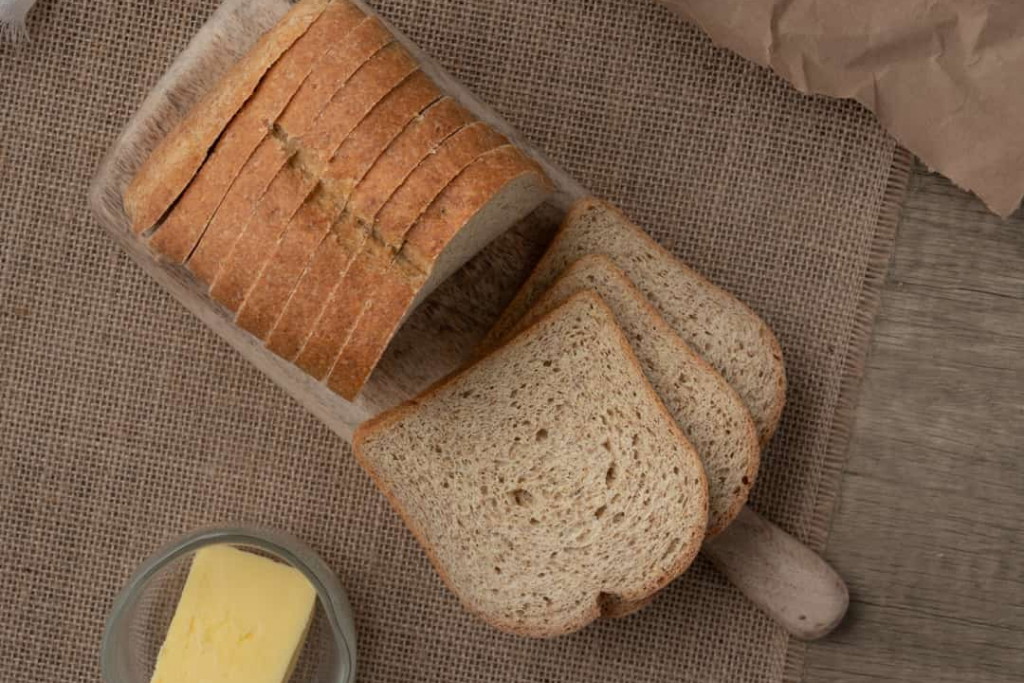
This is a proper yeasted loaf. Five ingredients, one rise, and 30 minutes in the oven. Because it is built on our low-carb flour blend rather than wheat flour, a serving of two slices has less than 2g carbs.
Why the Flour Blend Matters
Most homemade low-carb bread recipes use almond or coconut flour, and most of them produce something dense that behaves like cake. The problem is structural. Bread rises because gluten forms an elastic network that traps the gas yeast produces. Nut flours have no gluten at all, so there is nothing to trap anything.
Our low-carb flour blend contains vital wheat gluten alongside golden linseed, oat fibre and psyllium husk. The gluten gives you the network, the psyllium and linseed give you the crumb, and the whole blend contains only 3.1 percent carbohydrate. That combination is what lets this recipe behave like actual bread.
It also means this loaf is not gluten free. If you need gluten free, this is not the recipe for you.
Getting the Water Temperature Right
Sixty degrees is the number in the recipe and it is worth measuring rather than guessing.
Yeast is a living organism. Below about 30C it works sluggishly and your rise takes hours. Above about 50C it starts to die, and above 60C it dies quickly. The reason the recipe specifies 60C is that the water cools rapidly as it hits the flour, so it arrives at the yeast at the right temperature rather than at the temperature it left the kettle.
If you do not own a thermometer, boiling water mixed roughly one part to two parts cold water lands close enough.
Kneading and Proving
Five minutes of kneading minimum. This dough is stickier than a wheat dough and it will not form a smooth ball in the way you might expect. That is normal. Oil your hands rather than adding more flour, which throws the ratios out.
The 90 minute prove in a warm oven at around 90C is a shortcut on a traditional two hour rise at room temperature. Turn the oven on, let it reach temperature, then turn it off before the dough goes in. A 90C oven with the heat still running will start cooking the crust.
If you are using a bread maker, choose the setting with the least kneading. Over-kneading develops the gluten too far and gives a tight, tough crumb.
What to Do With It
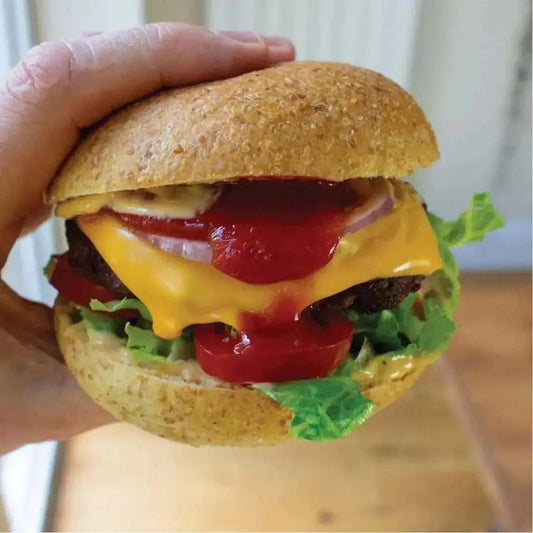
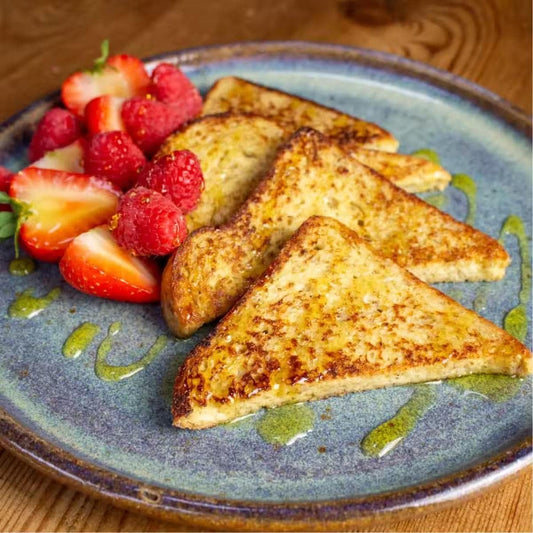
Sandwiches, toast and anything else you have been missing. It slices cleanly once fully cool, which takes about an hour, and slicing it warm will tear it.
For a topping, our low-carb mayonnaise takes two minutes, and our low-carb raspberry jam covers the sweet side.
If you would rather not bake, our artisan baked goods range covers sliced loaves, rolls, baguettes and focaccia, all baked in our own bakery. And if you bake regularly, the 4kg flour bundle works out cheaper per loaf.
Storage
Three days in a bread bin, or slice and freeze. Freezing is the better option, as this loaf contains no preservatives and firms up quickly at room temperature. Toast straight from frozen.
Frequently Asked Questions
How many carbs are in homemade low-carb bread?
1.7g per serving of two slices in this recipe, with 13.6g of fibre and 19.9g of protein alongside it. A standard wholemeal loaf is closer to 30g of carbs for the same amount.
Is this bread gluten free?
No. Our low-carb flour blend contains vital wheat gluten, which is what allows the loaf to rise properly. There is no gluten free version of this recipe that produces the same result.
Why did my dough not rise?
Water temperature, nearly always. Too hot kills the yeast, too cold leaves it dormant. Check the yeast is in date too, as dried yeast loses activity over time.
Can you make it in a bread maker?
Yes. Use the setting with the least kneading, as this dough does not need the long knead a wheat dough does.
Can you make it without eggs?
The eggs contribute structure and richness. You can replace them with 100ml of extra water and a tablespoon of olive oil, though the crumb will be more open and the loaf less soft.







6 comments
Hi Mink and Nancy 👋 We have used a standard 400g loaf tin for this recipe! 🍞 🧑🍳
Hi. What sized bread tin do you use for your bread please ?
I was going to ask exactly the same question as Nancy. I have a larger loaf tin, which measures 8½" x 4½" x 2½". The 400g loaf on sale on the website is quite a bit smaller than my tin, so I’d like to know the tin size used, so I can scale up the quantities, to suit.
Hi. Can you tell me what size bread pan you used for this loaf please ?
Thanks.
Hi Kate 👋 Unfortunately no. This recipe calls for our own low-carb flour blend. You can get yours here: https://lowcarbfood.co/collections/ingredients