

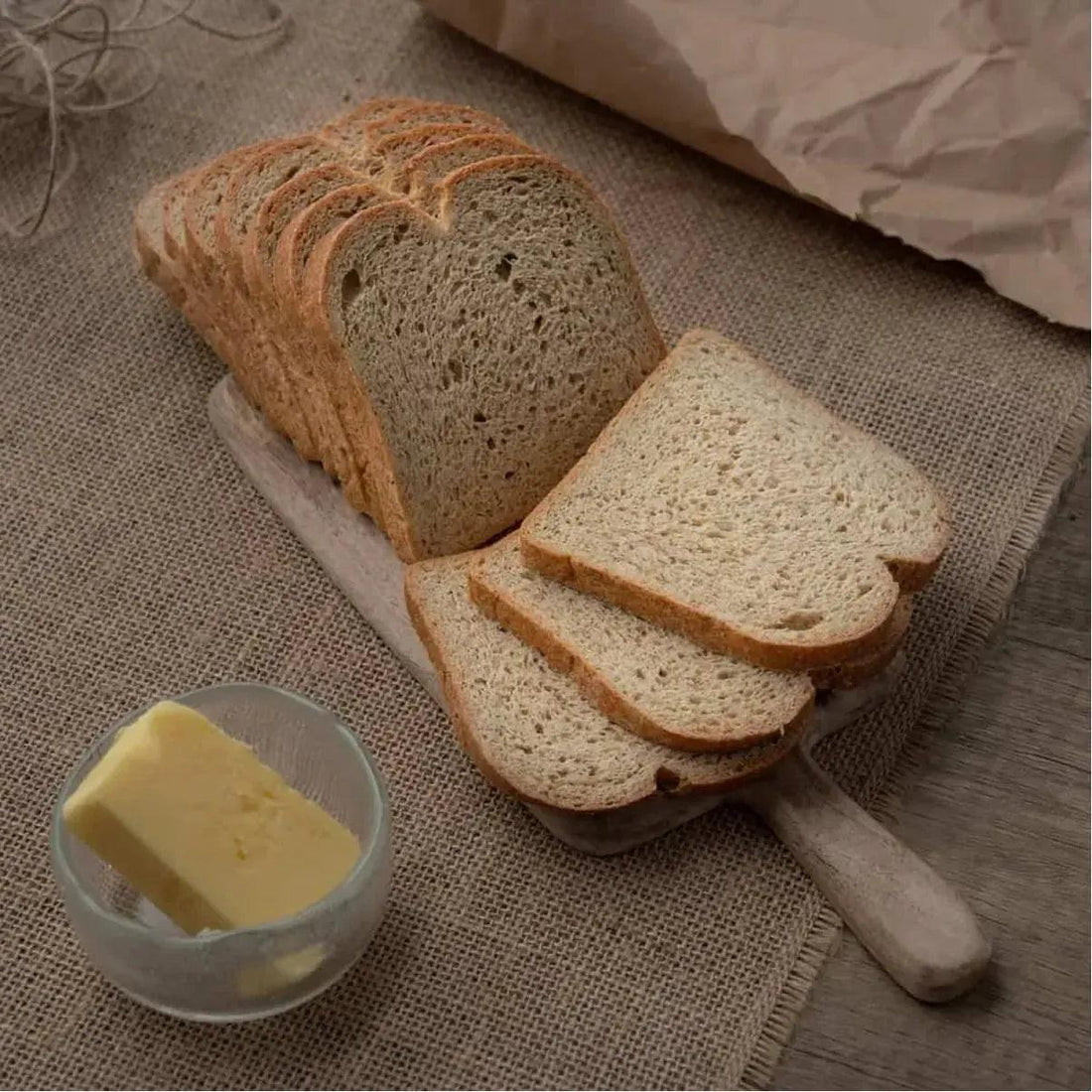
The Best Low Carb Bread in the UK: An Honest Buyer's Guide
Share
Why Finding Genuinely Low Carb Bread in the UK Is Harder Than It Should Be
If you've ever stood in a supermarket aisle squinting at a label on a loaf marketed as "keto friendly" or "diabetic friendly," you'll know the frustration. The front of the pack makes promising claims. Then you flip it over, look at the nutritional information, and find 15, 18, even 22 grams of carbohydrates per 100g. That's not low carb bread. That's ordinary bread with a clever marketing team behind it.
This guide exists because we think people deserve better information. Whether you're following a ketogenic diet or simply trying to reduce the amount of carbohydrate in your diet, the difference between genuinely low carb bread and bread that merely claims to be can have a real impact on your health and your results. We're going to walk you through exactly what to look for, what to ignore, and how to read a nutritional label with a properly critical eye.
We'll also be honest about our own bread - because we think the best way to earn your trust is to give you the tools to make the decision yourself.
What Does "Low Carb Bread" Actually Mean?
Here's the problem: in the UK, there is no legal definition of "low carb." Unlike "low fat" (which must contain no more than 3g of fat per 100g under EU-derived rules still in effect in the UK) or "reduced sugar" (which must contain at least 30% less sugar than the standard product), "low carb" is essentially a free-for-all. Any manufacturer can put it on a label without meeting a specific threshold.
The same applies to terms like "keto friendly" and "keto bread". These are marketing terms, not regulated nutritional claims. A bread containing 20g of carbohydrates per 100g can legally be sold as "keto friendly" in the UK, even though 20g of carbs per 100g would represent a significant portion of a day's carbohydrate allowance on a strict ketogenic diet.
This isn't necessarily dishonest – "lower carb than our standard loaf" is a legitimate thing to say, and many of these products genuinely do contain fewer carbs than a standard white loaf (which typically comes in at around 47g of carbohydrates per 100g). But "lower than standard" and "low carb" are very different things when you're trying to stay in ketosis or manage blood sugar.
So the first and most important thing we'd say to anyone looking for the best low carb bread in the UK is this: ignore the front of the pack. Read the nutritional information on the back.
How to Read a Bread Label If You're Eating Low Carb
When you pick up a loaf marketed as low carb, keto, or diabetic friendly, here's exactly what to look at:
1. Carbohydrates per 100g - not per slice
Per-slice figures can be misleading because slice thickness varies enormously between products. A very thinly sliced loaf will have a low per-slice carb count simply because there isn't much bread in each slice - not because the bread itself is low in carbs. Always compare per 100g figures across different products to get a fair comparison.
As a rough guide:
- Under 5g carbs per 100g: genuinely low carb – suitable for most ketogenic diets
- 5–15g carbs per 100g: reduced carb - lower than standard bread, but not keto-compatible for most people
- 15–25g carbs per 100g: marginally lower carb – the front of the pack may say "low carb" but this is essentially regular bread territory
- Over 25g carbs per 100g: standard bread, regardless of what the packaging claims
Our bread contains 1.7g of carbohydrates per 100g. We think that's what genuinely low carb bread should look like.
2. "Of which sugars" vs total carbohydrates
Some breads marketed as diabetic friendly or low carb have reduced their sugar content significantly – and will prominently display a low "of which sugars" figure. This is not the same as being low in total carbohydrates. Starch (which makes up most of the carbohydrates in bread) is broken down into glucose by the body just as sugar is. A bread with 0g of sugar but 20g of total carbohydrates per 100g will still spike blood sugar.
Always focus on the total carbohydrate figure, not just the sugar line underneath it.
3. The ingredients list
Once you've looked at the numbers, it's worth looking at what's actually in the bread. A few things to watch for:
- Modified starches and maltodextrin: these are highly processed carbohydrate sources that can appear in "low carb" products and have a significant glycaemic impact despite technically being fibre or starch in a modified form
- Seed oils: many breads (including those marketed as healthy) use sunflower oil, rapeseed oil (or palm oil – not a seed oil but still relevant). These are cheap, shelf-stable fats that many people following a low carb or ancestral diet choose to avoid
- Gums and stabilisers: xanthan gum, guar gum and similar additives are commonly used in low carb baking to compensate for the structural properties lost when removing wheat flour. They're not harmful, but they're a sign of a more processed product
- Preservatives: E200, E282 (calcium propionate), and similar additives extend shelf life. They're all too common in mass-produced bread, including low carb versions
- Sweeteners: some low carb breads add sweeteners to improve palatability. This is worth noting if you're sensitive to sweeteners or following a strict whole-foods approach
Our bread contains vital wheat gluten, golden linseed, oat fibre, psyllium husk powder, water, pasteurised whole egg, extra virgin olive oil, yeast and salt. Nothing else.
What to Expect From Breads Marketed as Keto or Diabetic Friendly
Without naming specific products, we want to give you an honest picture of what you're likely to find when you look at the low carb bread options currently available in the UK.
Supermarket "lower carb" breads
Several major supermarkets now stock bread marketed with low carb or diabetic-friendly positioning. These tend to sit in the 15–22g of carbohydrates per 100g range. That's meaningfully lower than a standard white loaf at 47g per 100g, and for someone simply reducing carbs rather than following a strict ketogenic protocol, they may be a reasonable option. But if you're aiming for ketosis (which typically requires keeping total carbohydrates below 20–50g per day) two slices of this kind of bread could account for a significant portion of your entire daily allowance.
Check the label. Every time. Formulations change, and products that were significantly lower carb a couple of years ago may have been reformulated.
Specialist "keto" breads from health food brands
There are a growing number of specialist brands producing bread explicitly marketed as keto. These tend to perform better on the numbers – you'll more often find figures in the 5–12g of carbohydrates per 100g range. Some are genuinely reasonable products. But again, we'd encourage you to read the label carefully and pay attention to the ingredients. Some achieve their carb count using large quantities of modified starch, maltodextrin, or ingredients that have a higher glycaemic impact than the carbohydrate figure alone might suggest.
The taste and texture question
This is where many low carb breads fall down, and we want to be honest about it. Making bread that is simultaneously low in carbohydrates, free from gums and stabilisers, and genuinely pleasant to eat is hard. Many products on the market get two of those three right. Achieving all three takes time, investment and a willingness to bake in smaller quantities than an industrial plant allows.
We're not going to tell you our bread tastes identical to a standard white loaf – it doesn't, and anyone who tells you their low carb bread is indistinguishable from a Warburtons Toastie is either mistaken or being economical with the truth. What we will say is that our bread has been independently reviewed by over 650 customers at an average of 4.5 stars, and that the most common piece of feedback we receive is some variation of "this is the first low carb bread I've actually enjoyed eating."
The Best Low Carb Bread UK: What to Actually Look For
Based on everything above, here's a simple checklist you can apply to any low carb bread before you buy it:
- Under 5g of total carbohydrates per 100g – if you're following a ketogenic diet. Up to 15g may be acceptable if you're simply reducing carbs
- A short, recognisable ingredients list – ideally fewer than ten ingredients, none of which you'd need a chemistry degree to identify
- No modified starches or maltodextrin – these can undermine the low carb benefit
- Clear nutritional labelling – per 100g figures, not just per slice
- Genuine customer reviews – not just marketing copy about taste
Our Bread: The Honest Version
We make low carb bread in the UK, and we've been doing it long enough to be honest about both its strengths and its limitations.
The strengths: 1.7g of carbohydrates per 100g. No preservatives, no seed oils, no gums, no sweeteners. Artisan baked. Available as sliced loaves in 350g and 700g sizes (thin and thick sliced), bread rolls, seeded rolls, baguettes, seeded bloomers and focaccia. Verified by over 650 customer reviews averaging 4.5 stars.
The limitations: Because we use no preservatives, our bread has a short shelf life and should be frozen on arrival. (This trips some people up.) Freeze it, take slices out as needed, and toast straight from frozen. Once you're in the habit, it's no different to any other bread. But if you're expecting to keep a loaf on the counter for a week, you'll be disappointed.
Our bread also contains gluten – it's central to the structure of the loaf. If you're coeliac or gluten intolerant, our bread isn't suitable for you, and we wouldn't want to mislead you into thinking otherwise.
We also can't ship chilled, which means our bread is dispatched ambient and arrives ready to freeze. Some customers are surprised by this; we'd rather you know upfront.
Frequently Asked Questions
Can I eat low carb bread on a ketogenic diet?
It depends on the bread. Bread marketed as "keto friendly" with 15–20g of carbohydrates per 100g is unlikely to be compatible with a strict ketogenic diet - two slices could account for the majority of a day's carbohydrate allowance. Our bread, at 1.7g per 100g and 0.5g per slice, sits comfortably within most ketogenic dietary frameworks.
How should I store low carb bread?
Because genuinely low carb bread made without preservatives has a short ambient shelf life, freezing is the best storage method. Freeze on arrival, take slices out as needed, and toast straight from frozen or leave to defrost at room temperature for 20–30 minutes. This applies to our bread and to any preservative-free low carb bread you buy.
Why is low carb bread so expensive compared to regular bread?
The ingredients used to make genuinely low carb bread (vital wheat gluten, psyllium husk, oat fibre, golden linseed) are significantly more expensive than the wheat flour used in standard bread. Low carb bread also can't be produced at the same industrial scale as mass-market loaves, which further increases the cost per unit. We're not going to pretend our bread is cheap, because it isn't – but the cost per slice is lower than it might appear when you consider that low carb bread is typically much more filling than standard bread, and that you're likely to eat fewer slices as a result.
What's the difference between low carb bread and gluten-free bread?
These are often confused but they're very different things. Gluten-free bread is made without gluten (which means without wheat, barley or rye) and is suitable for people with coeliac disease or gluten intolerance. It is not inherently low in carbohydrates; many gluten-free breads use rice flour, tapioca starch or potato starch, all of which are high in carbohydrates. Low carb bread, by contrast, may contain gluten (ours does) but is specifically designed to minimise carbohydrate content. The two categories occasionally overlap (there are gluten-free lower carb breads) but they are not the same thing.
The Bottom Line
The best low carb bread in the UK is the one that delivers the carbohydrate content it promises, uses ingredients you're comfortable with, and actually tastes good enough that you'll eat it. All three matter.
Don't take labels at face value. Read the nutritional information. Compare per 100g figures. Look at the ingredients list. And if a product seems too good to be true – it probably is.
If you'd like to try ours, you can browse our full keto bread range here, including sliced loaves, bread rolls, baguettes and more. Every product comes with full nutritional information, a complete ingredients list, and the reviews of several hundred people who've already made the decision you're considering.
We think that's the most useful thing we can offer: the information to make the choice yourself.
