Shop-bought pizza sauce almost always contains added sugar, and jars aimed at the pizza market are often the worst offenders. This one is passata, garlic, olive oil and dried herbs.
Passata Rather Than Tinned Tomatoes
Passata is sieved, uncooked tomato with the skins and seeds removed. That matters for a pizza sauce for two reasons.
First, it is already smooth, so there is no blending or sieving step. Second, it contains less water than a tin of chopped tomatoes, which means a shorter reduction and a sauce that will not make your base soggy.
Check the label before you buy. Passata should contain tomatoes and sometimes salt. Anything listing sugar, glucose syrup or concentrate belongs to a different category.
Cooking the Garlic First
The recipe starts by cooking pressed garlic gently in olive oil until fragrant, and that is around 60 seconds rather than a minute of hard frying.
Raw garlic added straight to a simmering sauce stays sharp and slightly acrid. Cooked briefly in fat first, it turns sweet and mellow, and that flavour disperses through the whole sauce rather than sitting in hot spots. Burnt garlic turns bitter and cannot be rescued, so pull the pan off the heat the moment you can smell it.
Why the Herbs Go In Dried
Dried oregano and basil are the right choice here, which is unusual. Dried herbs release their flavour into liquid over time, which is exactly what a five minute simmer allows. Fresh basil added at the same point turns black and loses its aroma entirely.
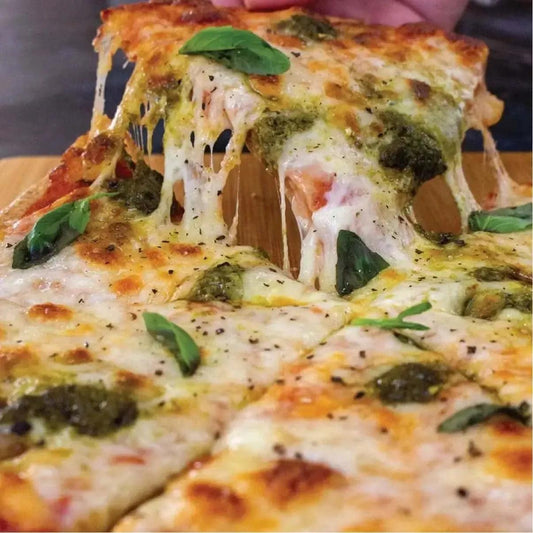
If you want fresh basil, tear it over the finished pizza after it comes out of the oven rather than putting it in the sauce.
The red pepper flakes are optional in the sense that you can leave them out, but a quarter teaspoon across the whole batch adds warmth rather than heat.
Using It
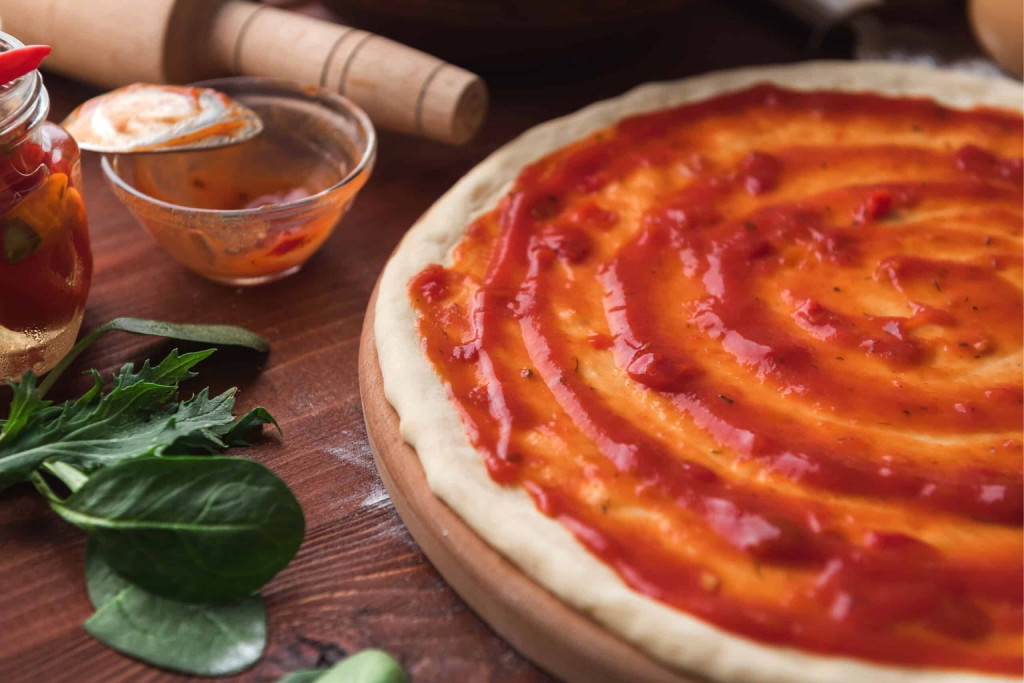
Spread it thinly. The most common mistake with any pizza sauce is using too much, which steams the base from above and stops it crisping. Two tablespoons is enough for an eight inch base.
It is designed to go on our low-carb pizza bases, which come in at under 2g of carbs per 100g. If you would rather make your own, our low-carb pizza base recipe uses our flour blend.
It also works as a dip for our low-carb seeded crackers and as a base for a quick keto pasta dish if you add cooked mince.
Batch Cooking
This doubles and triples without any adjustment. Five days in an airtight container in the fridge, or freeze it in an ice cube tray. Two cubes is roughly one pizza, which makes a Friday night considerably easier.
Frequently Asked Questions
Is pizza sauce keto?
Homemade, yes. Most shop-bought jars contain added sugar and land between 6g and 10g of carbs per serving, which is where the problem starts.
Is this sauce vegan?
Yes. Passata, garlic, olive oil and dried herbs are all plant based.
How long does it keep?
Five days in the fridge in an airtight container, or three months frozen. An ice cube tray is the most useful way to freeze it.